• My Goals for 2026

    As the new year has finally arrived , I find myself reflecting on the past year and envisioning what the next one will hold.

    Becoming a first-time mom made 2025 a year of incredible highs, accompanied by some lows that we managed to overcome. While I absolutely love being a mother, I also want to return to the activities and goals I set aside during my maternity leave.

    Here are my goals for 2026.

    1. Move my body for 2.5 hours each week

    During my maternity leave, I walked with the stroller almost every day. However, now that I have returned to work, I have become more sedentary. I don’t have specific exercise plans in mind, but I believe that any form of physical activity—whether it’s running, biking, doing yoga, or practicing pelvic floor rehabilitation—will help me reach my fitness goals.
    2. Attempt to reach 1,000 hours outside with my daughter

    Our family tries not to rely on screens to entertain our daughter. I first learned about the 1,000 Hours Outside movement this year while listening to the Minimalist Moms podcast. I’ve noticed that my daughter is always in a good mood when we go outside. Reaching 1,000 hours outside may be tough as working parents and due to the challenging weather in Canada, but I will strive to get as close as possible to this goal.

    3. Post 1 blog post per month

    I started this blog in the summer to document my decluttering journey. However, since returning to work, I’ve found it challenging to keep up with it. I plan to get back into blogging this year. To make my goal more realistic and achievable, I’ve decided that one post per month will be manageable for now.

    4. Keep up with my daily tasks

    I really want to keep my house in order this year. I have found that daily tasks are the key to keeping the clutter away. Here are the main daily tasks that I want to do every day/almost every day. 

    • Empty the dishwasher in the morning and empty it at night
    • Do 1 load of laundry 
    • 5 min pick up
    • Sweep the kitchen

    I first heard of the daily habits concept when I read one of Dana K. White’s book for the first time. That have been quite life-changing for me. I recommend you read her books or listen to her podcast if it interests you. 
    5. Build my emergency fund back up.

    After a year of maternity leave and only being paid 50% of my salary for a good part of it, let’s say my emergency fund is now at an all time low. I started working part-time again in the fall (three days a week) and I am mindful of my spending in order to build back up my emergency fund and pay back some debt that we racked up after doing construction work on the foundation of our house last spring. For now, I really enjoy the cash enveloppe system in order to keep track of my spending. 
    These are my goals for the new year: I aim for consistency rather than perfection. I want to improve my health, maintain a clean and organized home, enhance my financial situation, work on my personal projects, and enjoy time outdoors with my daughter.

    What are your goals for 2026? Don’t hesitate to let me know.
  • Things I Decluttered in July — 523 Fewer Things in My Home

    Every month, I try to be intentional about what stays in our home and what no longer serves us. July was no different. In fact, I was surprised by how much I was able to let go of once I started really looking around with fresh eyes.

    Here’s what I decluttered this month:

    • Markers and pencils — We had way more than we ever use. Many were dried out or duplicates we didn’t need.

    • Recipe books — I used to collect cookbooks thinking I’d try every recipe. In reality, I stick to a few favourites and most of my go-tos are digital now.

    • Hand towels — Some were stained or fraying, and honestly, we had too many in rotation.

    • More clothes — I did another round through our wardrobes and found even more pieces that don’t fit, don’t feel good, or just don’t get worn.

    • Table cloths — We rarely use them, and I kept only the most practical one.

    • Toys — A few toys that weren’t being played with found a new home. It always feels good to pass things on that someone else can enjoy.

    • Wine glasses — We had more than we ever use, and with a toddler in the house, less glass is better anyway.

    • Expired food — I did a full pantry sweep and was shocked at how much was hiding at the back.

    • Stickers — I had a surprising amount of old, unused sticker sheets. They were fun at one point, but now they were just clutter.

    Total objects decluttered in July: 523.

    It always amazes me how quickly things can accumulate, even when I’m trying to be mindful. This month reminded me that decluttering isn’t something you do once and forget about — it’s a habit. A mindset.

    Letting go of 523 things means more space, more calm, and more ease in our day-to-day life. And that’s exactly what I’m working toward — a life with less stuff, and more of what truly matters.

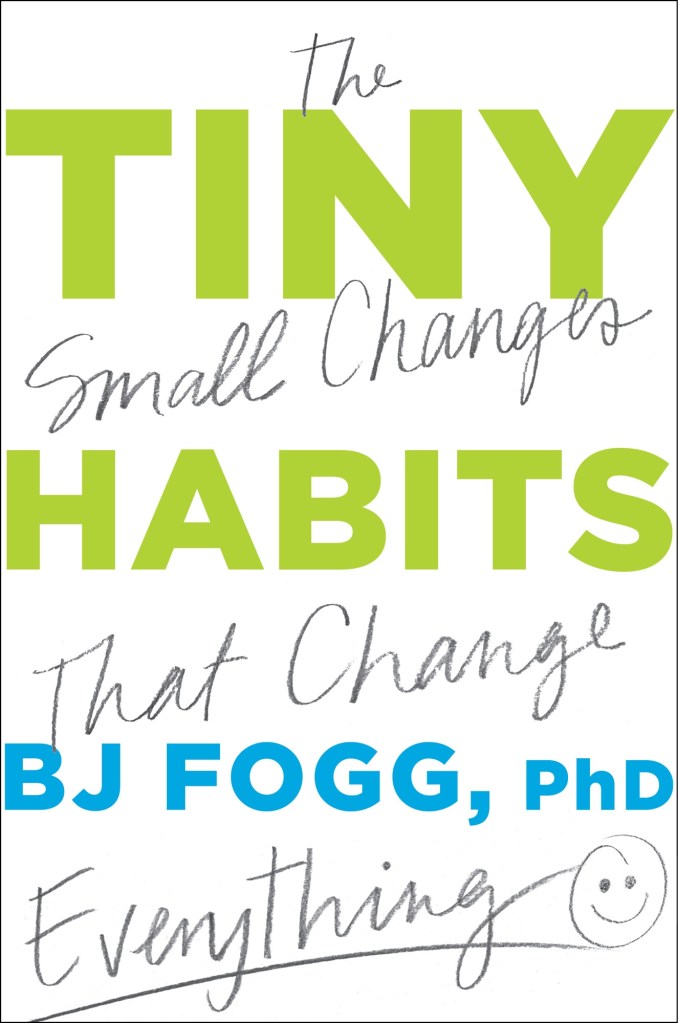
  • Book Review: Tiny Habits – The Small Changes That Change Everything by BJ Fogg

    Last week, I read Tiny Habits – The Small Changes That Change Everything by BJ Fogg, and I found it both inspiring and refreshingly practical. As someone who’s often tried to kick bad habits—or start healthier ones—I really connected with Fogg’s approach.

    One idea that stuck with me is the importance of starting small. Like, really small. Fogg explains that most people fail at habit change because they aim too big right away. When something feels too hard or overwhelming, it’s easy to give up. But if you start with a tiny step—what he calls a “tiny habit”—you set yourself up for success.

    He shares a great example: he wanted to start flossing daily, but could never stick with it. So instead of committing to a full flossing routine, he began with just one tooth a day. That’s it. Just one. If he flossed more, great! But if not, he’d still succeeded. Over time, that one tooth turned into two, then three, and eventually his whole mouth. The key was starting so small, it felt silly not to do it.

    Another concept I loved was habit stacking—the idea of pairing a new habit with something you already do. Fogg recommends choosing an existing routine (like brushing your teeth, making coffee, or going to the bathroom) and using it as a trigger. For example, you could decide to do two push-ups every time you go to the bathroom. It’s simple, doable, and adds up.

    That’s the habit I’m currently trying out! With a baby at home, finding time to work out has been tricky. But now, every time I use the bathroom, I do two push-ups on the counter. If I go five times a day, that’s 10 push-ups—more movement than I was getting before, and it actually feels manageable.

    Overall, I really appreciated BJ Fogg’s philosophy on behavior change. It’s not about willpower—it’s about designing habits that are so small and easy, they become part of your life almost effortlessly. I plan to keep applying this method to other habits I want to build, one tiny step at a time.

    What’s one tiny habit you’d like to start this week?

  • Bathroom Organization: A Real-Life Look Inside Our Cabinets and Closets

    One area of our home that used to constantly feel cluttered and chaotic was the bathroom. With limited storage space and different needs for each family member, it didn’t take much for the drawers to overflow and for things to get lost in the shuffle.

    But over time—and through a lot of trial and error—I found a system that’s simple, functional, and works for our family. It’s not Pinterest-perfect, but it’s intentional, and it makes our daily routines feel a lot smoother. Here’s a look at how I organize our bathroom and linen closet.

    Bathroom Cabinet and Vanity Setup

    We have a double sink vanity with a couple of drawers and two small cupboards underneath. I wanted each person in the family to have their own space to keep things simple and minimize daily clutter.

    Under the sink cupboard #1 is pretty empty—just the scale lives there. I like keeping some space open to breathe.

    Drawer #1 is for my partner’s hygiene products—his razor, deodorant, and anything else he uses regularly.

    Drawer #2 is for my hygiene products. I try to keep it pared down to the essentials so it’s not overflowing.

    Drawer #3 holds all of our kid’s hygiene items—a few bath toys, their toothbrush and toothpaste, hairbrush, and body lotion.

    Under the sink cupboard #2 is home to feminine products and extra body washes. I store everything in small open bins so I can see what we have at a glance.

    Linen Closet Organization

    Our linen closet is just outside the bathroom, and it has become one of the most practical spaces in our home—especially since I gave each shelf a specific purpose.

    Shelf #1: The first aid kit is right up top—easy to grab but out of reach for little hands.

    Shelf #2: This one is dedicated to medications and anything else we need to keep out of reach of the kids. Safety first.

    Shelf #3: This is where we store hand towels, face cloths, and our kid’s towels. I keep them rolled up to save space.

    Shelf #4: Just our everyday bath towels—nothing fancy, just what we use and love.

    Shelf #5: A small stash of beach towels lives here. I only keep a few since we don’t go to the beach often, but enough for everyone in the family.

    Shelf #6: This is our dirty laundry shelf. We keep a basket here so we can toss towels and clothes in as we go.

    Shelf #7: Extra toilet paper, neatly stacked. It’s not glamorous, but it’s one less thing to run out of during the week!

    This system isn’t about perfection—it’s about making life easier. Having a place for everything helps reduce decision fatigue and makes it more likely that things get put away where they belong. When I step into our bathroom now, it feels calm, not chaotic—and that small shift really adds up.

    Have you found a bathroom organization system that works for your home? Or is it still a work in progress (like ours was for a long time)? I’d love to hear what’s working—or not working—for you.

  • Simplifying My Hobbies as a New Mom: How I’m Making Time for What Matters

    Since having my daughter last November, I’ve come to a big realization: my free time has basically disappeared. Even though I’m still on maternity leave, I already feel the squeeze—so I can only imagine how it’ll be once I return to work in October.

    Before becoming a mom, I had a ton of hobbies and was always eager to try something new. But honestly, even back then, I wasn’t doing all the things I wanted to do. So now, as part of decluttering my life, I’ve decided to declutter my hobbies too. I’m streamlining and focusing on the ones that truly bring me joy and fit into my new lifestyle.

    Here are the hobbies I’m sticking with—for now:

    Triathlon Training

    Before I got pregnant, I had just started training for triathlons—and I loved it. It’s such a dynamic sport, with swimming, biking, and running all rolled into one. It’s hard to get bored when you’re switching things up all the time. I’m hoping to get back into it slowly as my schedule allows.

    Coloring (Yes, Really!)

    I picked this up over the winter, and it quickly became one of my favorite ways to relax. It’s super easy to take out and put away (a big plus with a baby around), and I especially enjoy color-by-number books. It’s like meditating, but with markers.

    Blogging

    This is a new one for me, but I’ve really gotten into it. It helps me stay accountable in my decluttering journey and gives me a creative outlet. Plus, I can write a quick post from my phone during nap time or while waiting in line—perfect for mom life.

    Reading

    Reading has been a constant in my life since I was a kid. These days, I squeeze it in with audiobooks in the car or ebooks on my Kindle when I get a quiet moment. It’s one of the few hobbies that doesn’t require much setup, which makes it a winner in my book (pun intended).

    Knitting & Crocheting (On Pause)

    I’ve kept my knitting and crochet supplies, even though I don’t really touch them right now. I imagine I’ll come back to them in a few years—maybe while sitting on the sidelines of my daughter’s future soccer games. It’s nice to know they’ll be there when I’m ready.

    So that’s where I’ve landed. I’ve pared down my hobbies to the ones that fit my current season of life. It feels good—less pressure, more enjoyment. And who knows, I might pick up a few more in the future. But for now, this feels just right.

  • Building a Mindful Capsule Wardrobe: Soft Summer & Soft Autumn Color Palette

    My Capsule Wardrobe Journey 

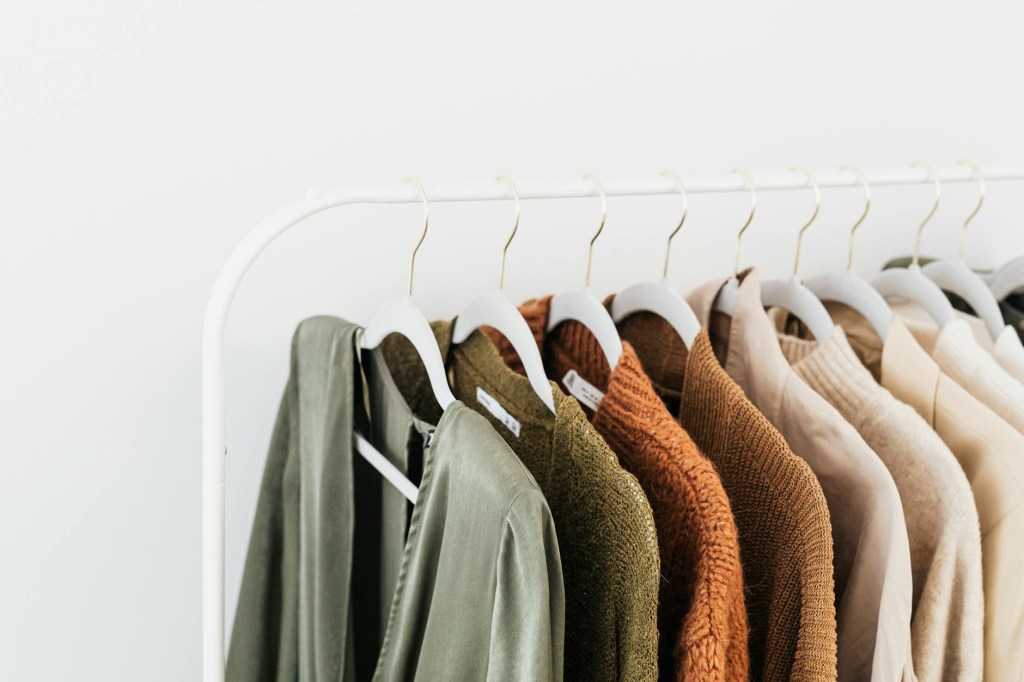
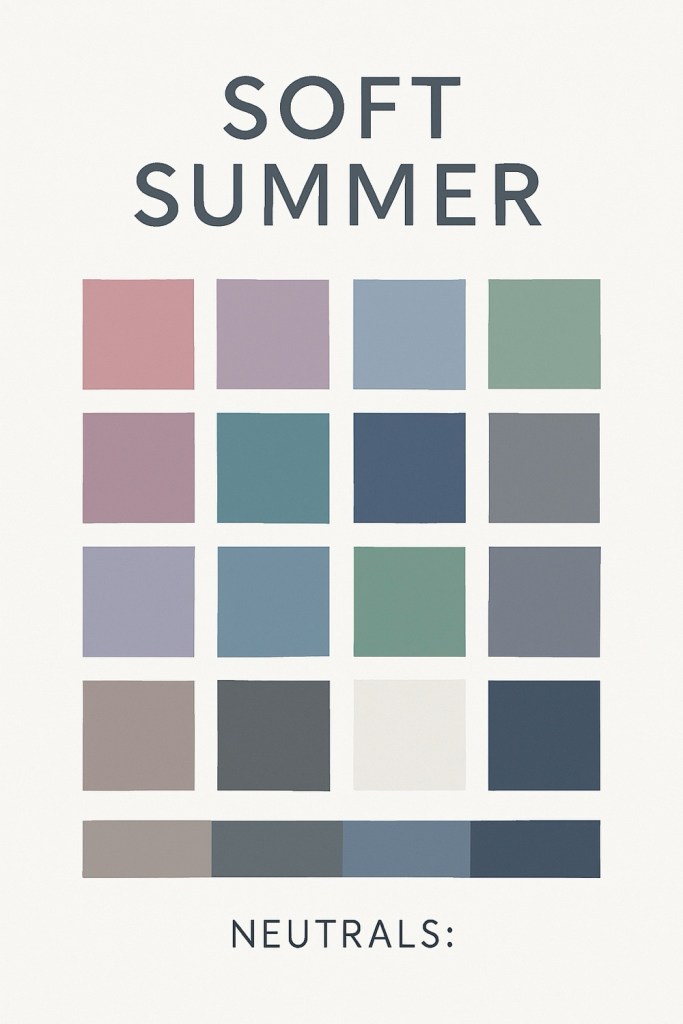
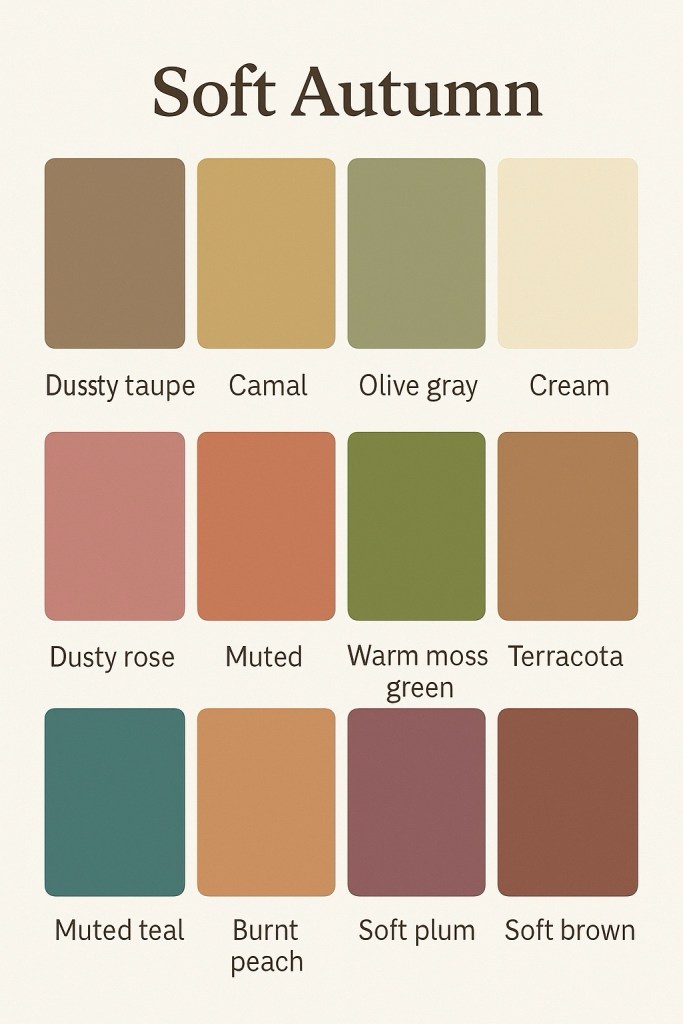
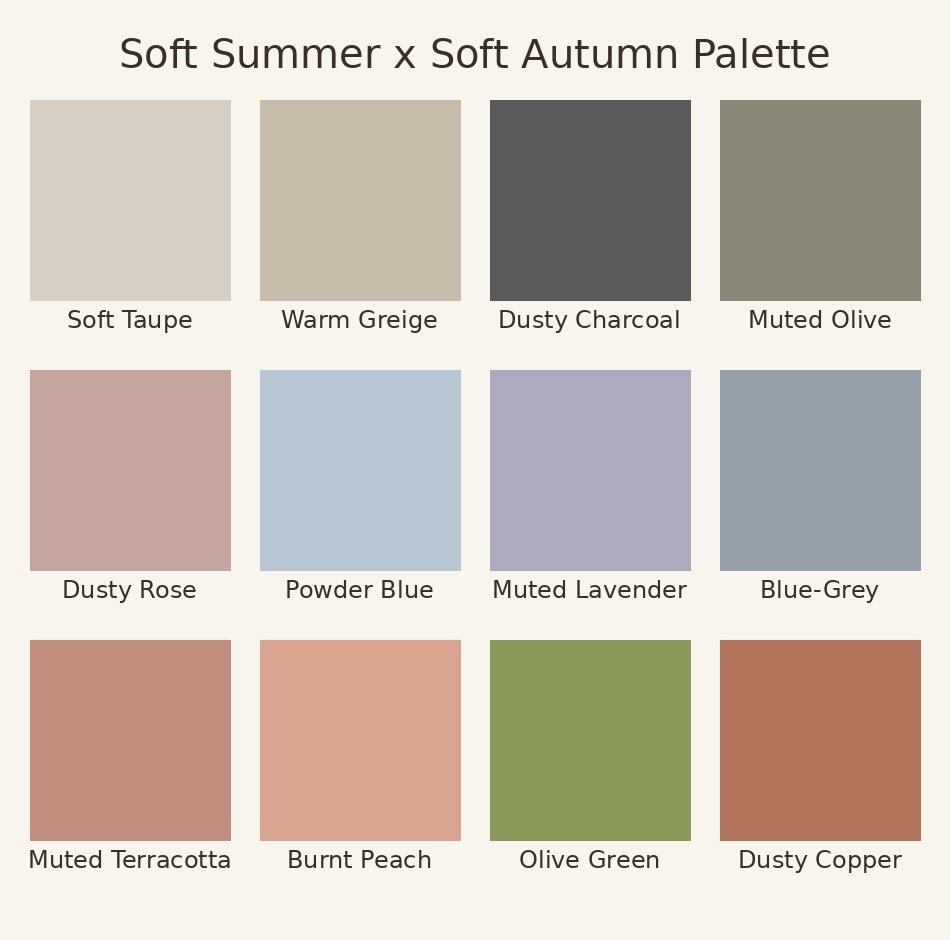
    After tackling a full closet declutter, I’m now focusing on being intentional with every new piece I bring in. I’ve begun building a capsule wardrobe, and the first step is choosing a cohesive color palette. To simplify the process, I used a color-season analysis—ChatGPT helped me figure out that I’m a Soft Summer in winter and a Soft Autumn once my tan develops in summer. That means I’ll lean into a cool, muted “Soft Summer” palette for winter, and a warm, earthy “Soft Autumn” palette for summer.

    The key to a versatile wardrobe is a cohesive color palette that makes mixing and matching effortless. By committing to these seasonal palettes, I’m making shopping decisions easier—knowing that every color I buy will mix well with what I already own and enhance my natural coloring.

    • Soft Summer (Winter Clothes): Cooler, muted tones—pale blues, rose grays, dusky lavender.

    • Soft Autumn (Summer Clothes): Warm, earthy tones—olive, camel, soft peach

    Going forward, I want to be extra thoughtful about the colors I invite into my closet—making sure every piece plays well together. Since I plan to significantly cut back on how much I shop, this will be a gradual journey. But that’s the point: I want every new item to be intentional, informed, and something I genuinely love. By building each addition around my color palette, I’m setting myself up for a wardrobe that feels cohesive, sustainable, and truly mine—no impulse buys, just pieces with purpose. Building this wardrobe is slow and deliberate—and that’s okay! My goal isn’t instant perfection, but intentional growth.

    At the end of the day, this capsule wardrobe is about more than just owning fewer clothes—it’s a lifestyle shift that brings clarity, creativity, and confidence to my everyday dressing. With my Soft Summer and Soft Autumn palettes guiding every pick, I’m not only curating a wardrobe that looks good and feels right, but also making choices that align with sustainable and mindful fashion principles. It’s a slow, intentional journey—but every thoughtful addition makes getting dressed more joyful and less stressful. So tell me: what colors feel like you when you open your closet?

  • Using the Container Concept to Tame My Closet

    Over the past month, I’ve been on a serious decluttering mission — especially when it comes to my clothes. It’s been surprisingly satisfying to let go of what I don’t need, but now I’m at the next stage: figuring out how to organize what I actually kept.

    Recently, I discovered Dana K. White (yes, I know, very late to the party), and I’m really into her “container concept.” The idea is simple but genius: you assign a physical container to hold your stuff — and when that container is full, that’s it. You don’t get more space, so you’re forced to be intentional about what earns a spot.

    So with that in mind, here’s a breakdown of my current clothing “containers” and what I’m putting in each one.

    Bedside Table

    Because yes, even pajamas need boundaries.

    • Drawer 1: Tights, socks, and a few random bedside knick-knacks (the usual suspects)

    • Drawer 2: Pajamas and those extra fluffy, cozy socks for chilly nights

    Dresser

    Trying to keep this one functional and not overflowing with forgotten tees.

    • Drawer 1: Underwear

    • Drawer 2: Casual t-shirts and sports shirts

    • Drawer 3: Long-sleeved athletic tops, leggings (both summer and winter ones)

    Wardrobe

    This is where most of the action happens.

    • Shelf: Pants, Christmas pajamas (yes, they get their own space), scrubs

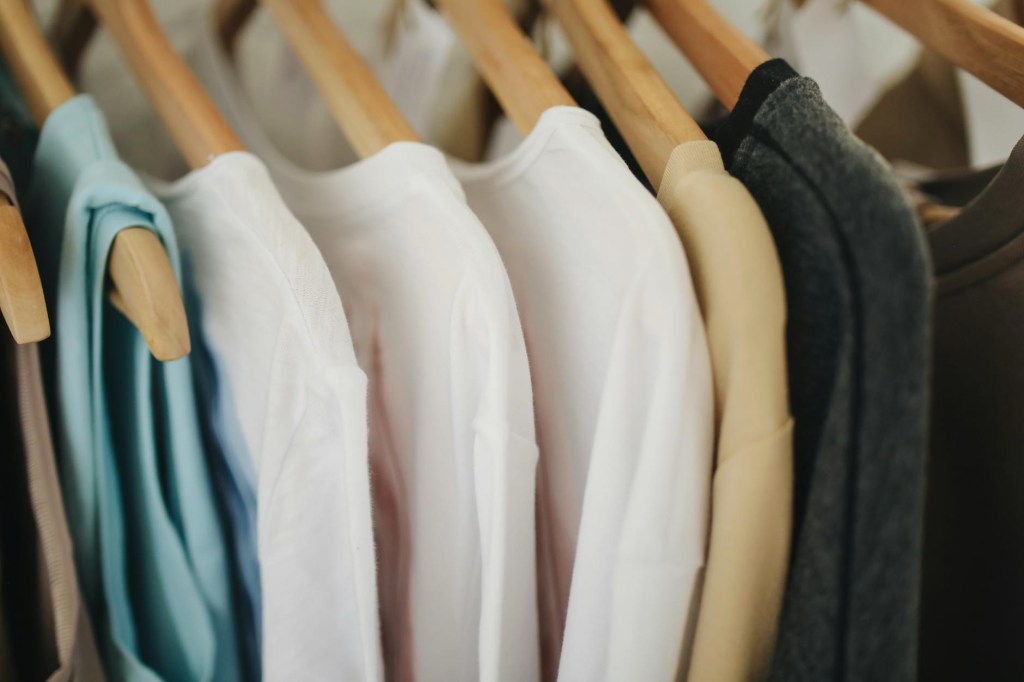
    • Hangers: Dresses, cardigans, long-sleeved shirts, blouses, sweatshirts, and dress pants

    • Shoe Rack: Shoes and sport socks

    • Hooks: Belts and purses

    3-Drawer Plastic Dresser (inside the wardrobe)

    Reserved for the sporty stuff.

    • Drawer 1: Summer shorts

    • Drawer 2: Biking gear

    • Drawer 3: Trisuits and bathing suits

    That’s where I’m at right now. It’s not Pinterest-perfect, but it works — and more importantly, it feels manageable. I’m really loving the idea that space is the limit, not my willpower. If it doesn’t fit in the container, it’s got to go.

    Still tweaking things, but I’m finally feeling like I can find what I need without digging through piles. Progress!

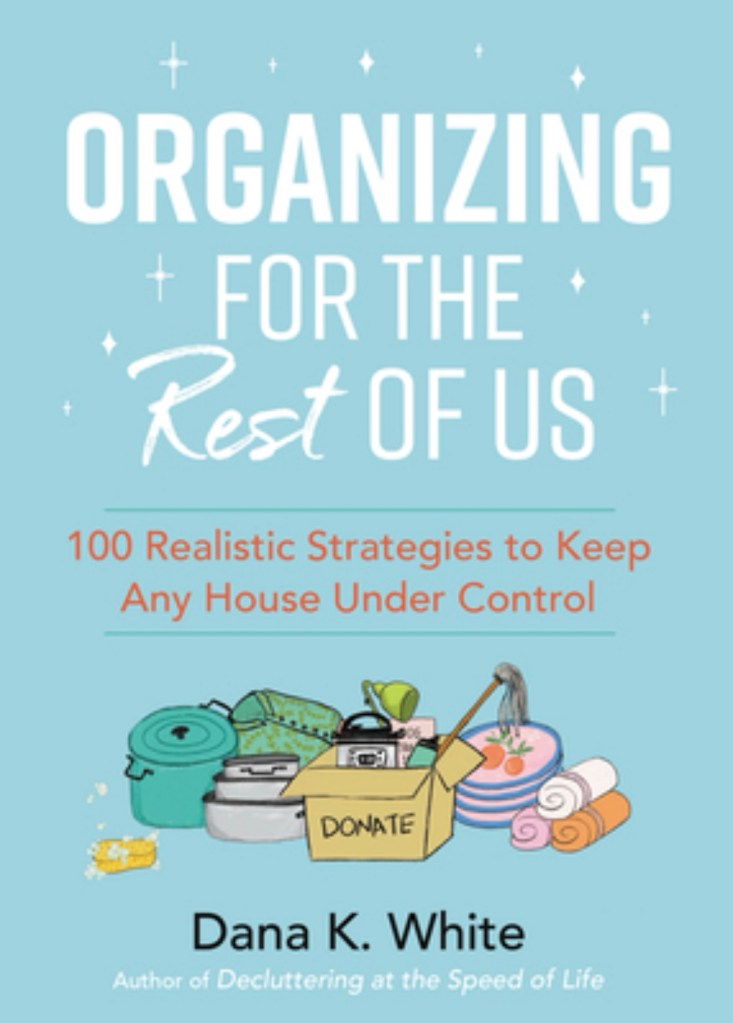
  • Book Review: Organizing for the Rest of Us – 100 Realistic Strategies to Keep Any House Under Control

    If you’ve ever looked around your house and thought, How did it get this bad?—you’re not alone. I recently stumbled across Dana K. White’s blog, A Slob Comes Clean, after seeing it mentioned in a comment on the r/declutter subreddit. And let me tell you, it was like finding a kindred spirit.

    Dana calls herself a “slob” in recovery, and I totally relate. I’m the kind of person who doesn’t notice clutter or mess until it’s absolutely overwhelming. So when I heard she had written a book called Organizing for the Rest of Us: 100 Realistic Strategies to Keep Any House Under Control, I knew I had to check it out.

    This book isn’t your typical Pinterest-perfect organizing guide. It’s practical, honest, and completely doable—even if you feel like cleaning and decluttering just aren’t in your DNA. Dana shares real-life, tried-and-true strategies that helped her take control of her home, and she breaks everything down in a way that makes sense (and feels totally judgment-free).

    One of the key takeaways for me was her “Container Method”—a game-changer if you struggle with having too much stuff and not enough space. She also talks about setting non-negotiable daily tasks that help keep things from spiraling (you know, like dishes and laundry actually being done).

    What I love most about Organizing for the Rest of Us is that it doesn’t promise perfection. Instead, it offers realistic home organization tips for people who just want their spaces to feel more manageable. It’s been a huge inspiration in my own decluttering journey, and I honestly think anyone who’s ever felt overwhelmed by mess will find something valuable here.

    If you’re looking for a compassionate, no-nonsense guide to getting your home under control, this book is 100% worth a read.

  • June Decluttering Recap: 359 Items Gone and a Closet I Love Again

    This month, I finally started tackling the clutter in my home. Now that I’m nearly 8 months postpartum, I felt ready to take on a big one—my clothes.

    Let me paint the picture: my wardrobe was packed to the brim. Same for my dresser. Oh—and the spare bedroom wardrobe, plus its dresser. I even had a bookshelf in my room filled with clothing. Meanwhile, my partner had only half the wardrobe and half of the dresser in our bedroom. Yeah… a major declutter was overdue.

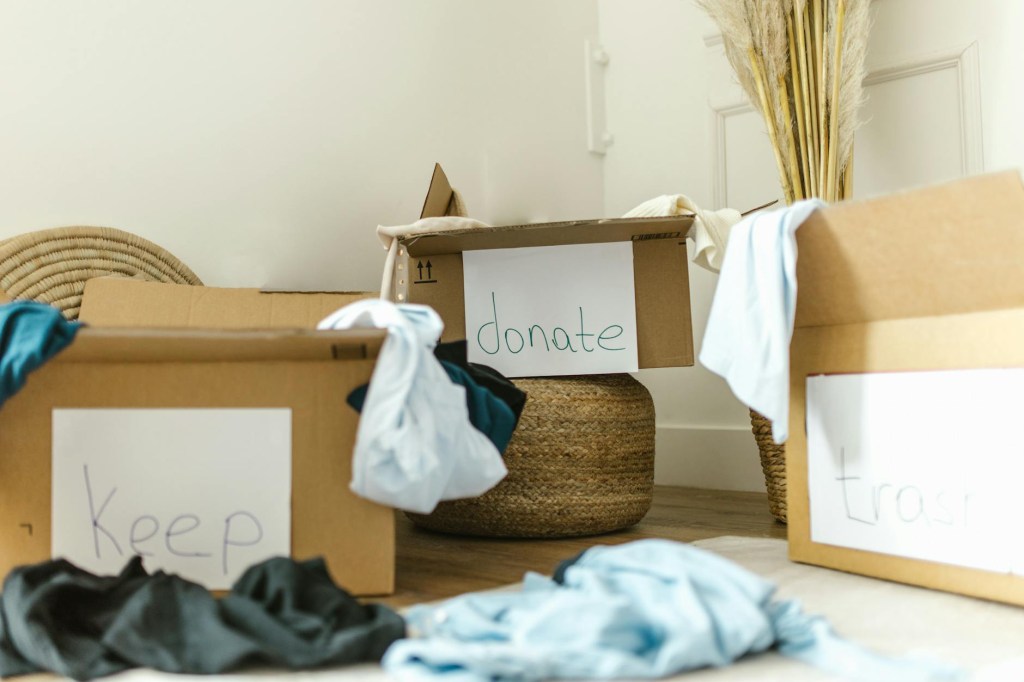
    I started by going through every single item of clothing. My goal was simple: if it doesn’t fit or I don’t love it, it goes. I did keep a few favorites—about 10 sentimental or “maybe later” pieces—which are now tucked away in a drawer in the spare bedroom.

    The rest? Most of it was donated. Anything too worn out was responsibly tossed.

    I followed the container concept by Dana K. White, which made the whole process feel manageable. For example, in my main wardrobe, I only kept as many clothes as I had hangers for. Once the hangers were full, I had to start making some decisions. It helped so much with setting limits.

    In total, I decluttered over 359 items in June! Not just clothes—there were a few random knick-knacks in the mix too. But wow, it feels so good to have breathing room again.

    I’m honestly loving how everything looks now. My closet isn’t just cleaner—it’s more functional. I’ll be writing a detailed post soon to share how I organized everything, especially for anyone going through a similar postpartum transition.

    If you’ve been thinking about decluttering but don’t know where to start, I highly recommend beginning with your wardrobe. It’s one of the most satisfying places to make space.

  • New Laundry Routine That’s Actually Working for Me

    Laundry has always felt overwhelming. I’m pretty good at washing all the loads within a day or two—but folding and putting everything away? That part can take me over a week! By the time I finally get through it, the hampers are full again and the cycle starts all over.

    The problem? While the clean clothes are waiting to be folded and put away, they just sit around, cluttering up my space. I don’t have a dedicated laundry room, so I end up with three or four laundry baskets spread out across my bathroom floor or piled on the guest bed. Not exactly ideal.

    But a couple of weeks ago, I decided to try something new—a laundry process that’s actually working for me so far.

    Here’s what I’m doing now:

    I don’t start a new load until the current one is completely done. That means washed, dried, folded, and put away. Only then do I throw the next load in the washer. It’s a simple shift, but it’s made a huge difference. Folding doesn’t feel so overwhelming anymore, and I’m not dealing with baskets of clean clothes just hanging around for days.

    So far, I’m loving this new routine. It feels more manageable and keeps my space a lot less cluttered.

    What’s your laundry routine like? Does it work for you—or are you still trying to find a system that sticks? I’d love to hear how you handle it!